
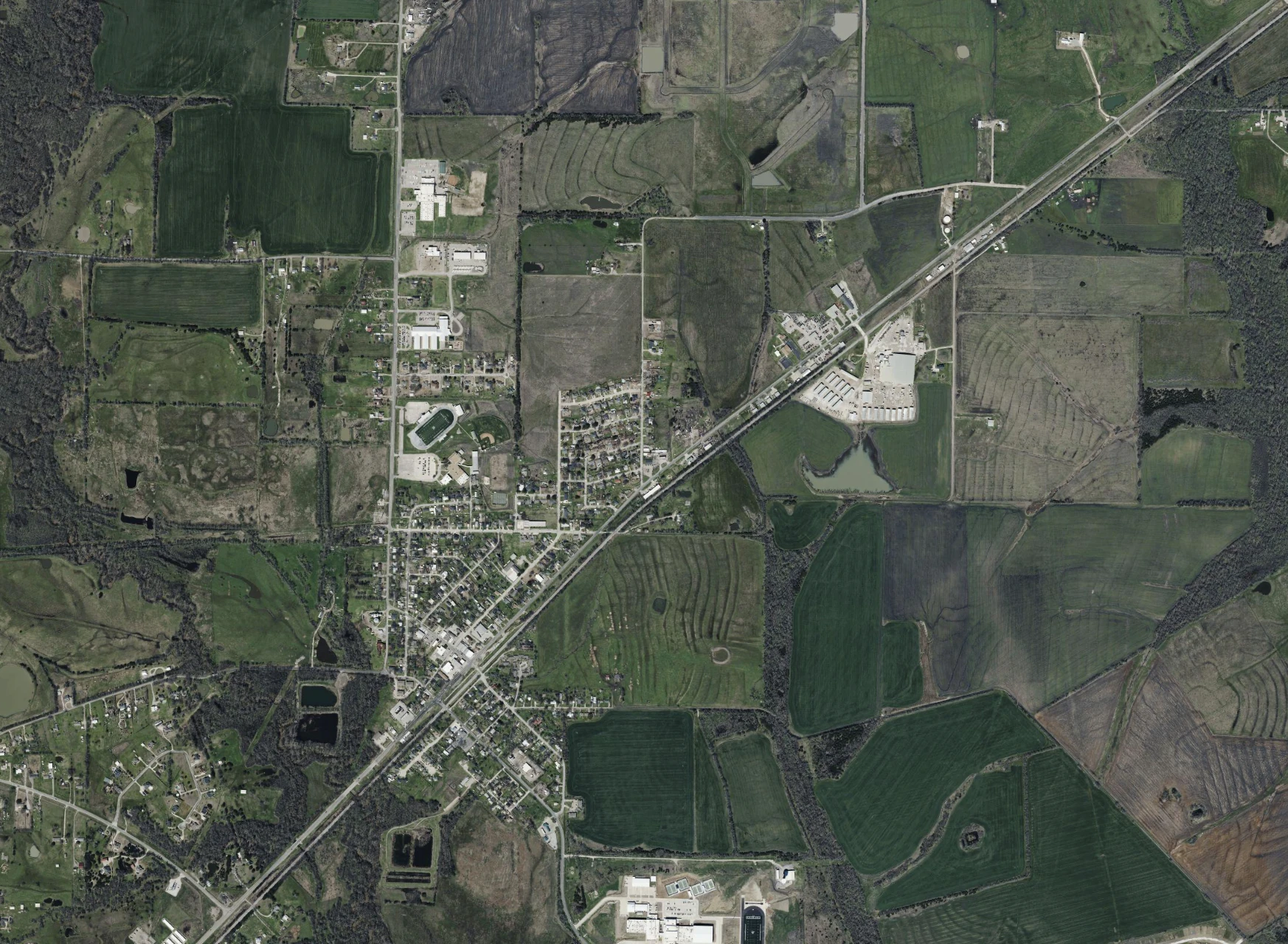
Raw land financing for development and investment opportunities.
financing on the Grand Strand sits at the crossroads of two realities that traditional lenders struggle to reconcile: land is the riskiest conventional real estate collateral category, but in Horry County — one of the most persistently supply-constrained coastal development markets in the Southeast — well-positioned land is also one of the most reliably appreciating investment categories available. The region's population growth, driven by retirees relocating from New York, New Jersey, Illinois, and California, has pushed the development frontier steadily outward from the established Myrtle Beach and Conway cores, creating a procession of formerly agricultural parcels and pine-flatwood tracts that transition from agricultural value to development premium as infrastructure reaches them.
Hard Money Lenders of Myrtle Beach provides financing for investors, developers, and landowners navigating this transition. We lend on raw land, development-ready parcels, and agricultural-to-development conversion sites throughout Horry and Georgetown Counties, applying underwriting criteria that reflect the real economics of coastal South Carolina land investment rather than generic bank caution about land as an asset class. Our land loans carry terms of 12 to 36 months — long enough for entitlement work and market timing — with interest-reserve structures that minimize cash-flow pressure during the pre-revenue holding period and extension provisions built into loan documents upfront for projects where regulatory timelines extend beyond initial projections.
We finance both individual development lots and large-scale parcel assemblages. We finance commercially-zoned parcels and raw agricultural land with long-term development potential. We finance land banking for investors with 3-to-5-year appreciation horizons and entitlement projects for developers ready to move immediately. The common thread is our willingness to apply local market knowledge to land underwriting rather than declining land requests categorically.
Residential development land acquisitions represent the most active application for our land loans. Developers acquiring parcels for subdivision development in the Carolina Forest growth corridors, the Highway 544 expansion zone, the Little River and Longs areas north of Myrtle Beach, and the inland Conway suburbs use our loans to secure land positions while completing entitlement work. We finance parcels ranging from five-lot infill subdivisions in established neighborhoods to 100-plus-acre master-planned community sites. Our loans accommodate the entitlement timeline — Horry County plat approval, CAMA permits where applicable, utility capacity reservation, and infrastructure design — rather than requiring all approvals in hand before funding.
Commercial land along the Grand Strand's primary corridors is among the most competitive and fastest-appreciating real estate categories in the region. Highway 17 retail land in North Myrtle Beach and the growing Murrells Inlet commercial node, Highway 501 land serving the inland growth corridor, and Highway 544 commercial sites in Socastee and the Carolina Forest area carry development values that can triple or quadruple raw-land acquisition prices when properly entitled and improved. We finance commercial land acquisitions for developers who need to move quickly on site control while arranging construction financing or anchor-tenant commitments.
Agricultural land with development potential — particularly parcels along highway frontage roads and at the edges of the established development footprint in Conway, Longs, Aynor, and Loris — represents the most speculative but potentially most rewarding land acquisition category. These parcels require patient capital and realistic assessment of the utility-extension and rezoning timelines before development value is realizable. Our land banking loans accommodate these longer-horizon positions with 24-to-36-month terms and extension provisions for projects where regulatory timelines extend.
Land assemblage for large-scale development involves purchasing multiple parcels — potentially from different sellers, through separate transactions, over extended periods — to create development-ready sites larger than what individual parcels could support. Assembling 200 to 500 acres for a master-planned community, or combining four or five commercial lots to create a site large enough for an anchor-tenanted retail center, requires financing that can accommodate multiple closing dates, option structures, and phased acquisition timelines. We structure assemblage loans with rolling commitment capacity and staggered advance schedules that match the assemblage process.
Wetland constraints are the defining complexity of Horry County land investment. The Waccamaw River, Intracoastal Waterway, and the county's extensive network of pocosins, Carolina bays, and bottomland hardwood wetlands mean that a substantial portion of every rural parcel in the county — in some cases 50 to 80 percent — is subject to Army Corps jurisdictional wetland regulation that effectively prohibits development. Investors who acquire land without completing wetland delineation risk discovering that their projected developable acreage is substantially smaller than the gross parcel size. We require wetland delineation and, where indicated, Army Corps jurisdictional determination as a precondition for finalizing land loan amounts on rural or semi-rural parcels.
CAMA jurisdiction adds a second regulatory layer for parcels near the coast, tidal inlets, or estuarine waters. Development within 75 feet of high-water marks in CAMA-regulated areas requires SC DHEC CAMA permits with 45-to-90-day processing timelines. Projects requiring CAMA permits must incorporate those timelines into their development schedules, and our land loans for CAMA-affected parcels include realistic entitlement timelines that account for permit processing rather than assuming pre-construction approval is immediate.
Infrastructure availability — particularly sewer and water service — is the most commonly overlooked land investment constraint in the outer growth corridors of Horry County. Horry County Water and Sewer Authority allocates water and sewer capacity on a first-committed basis, and in active growth corridors, capacity for new development connections can be committed years in advance. Developers who acquire land without verifying utility capacity may face expensive force-main extensions or pump station investments that materially change project economics. We verify utility availability status during underwriting and adjust loan terms to reflect any required infrastructure investment.
Our land acquisition underwriting process begins with a comprehensive feasibility evaluation: parcel location and frontage, current zoning and development-right status, utility availability (water, sewer, electrical), wetland and CAMA exposure, proximity to established infrastructure, and the development trajectory of surrounding parcels. We review any existing environmental assessments, wetland delineations, engineering studies, or entitlement applications. We engage local Horry County land-use attorneys and planners to verify regulatory timelines when projects involve significant entitlement risk.
Land loans are structured with LTV ratios of 55 to 70 percent of current appraised value depending on location, entitlement status, and development certainty. Parcels in active development corridors with confirmed utilities may approach the upper range; raw agricultural parcels without confirmed development potential typically fall in the lower range. Interest reserves funded into the loan structure minimize cash-flow pressure during the pre-revenue holding period.
We build extension provisions into every land loan document at origination, with clear triggers (entitlement progress milestones) and terms (extension fees and any rate adjustments) established upfront. We do not treat extension requests as exceptional situations requiring emergency renegotiation — we treat them as anticipated outcomes for a portion of development projects and structure for them accordingly.
We provide financing throughout South Carolina's coastal development corridor including Myrtle Beach, Conway, North Myrtle Beach, Little River, Longs, Loris, Aynor, Galivants Ferry, and rural areas of Horry and Georgetown Counties. Our knowledge of Horry County's development growth patterns and infrastructure expansion plans helps you identify land positions ahead of the development curve.
We finance residential development land (raw, partially improved, and entitled parcels), commercial development sites (retail, office, medical, industrial), agricultural land with development potential, timberland with near-term development prospects, and rural acreage in infrastructure-expansion corridors. We evaluate each parcel on its specific combination of current and projected value — including wetland extent, CAMA exposure, utility availability, and proximity to established development — rather than applying categorical exclusions by land type.
Land loans typically offer 55 to 70 percent LTV depending on parcel characteristics. Parcels in active development corridors with confirmed utilities, clear entitlement paths, and strong comparable land sales support may approach 70 percent LTV. Raw agricultural parcels without confirmed utility availability or approved entitlements typically receive 55 to 60 percent LTV. We base loan amounts on independent appraisals from land appraisers with Horry County coastal-market experience rather than automated valuation tools.
Yes, with appropriate due diligence. We require a wetland delineation on parcels with potential wetland exposure — specifically, any parcel within a quarter mile of identified wetland systems, tidal waters, or Carolina bays. CAMA jurisdiction affects parcels near the coast and tidal inlets, and CAMA permit timelines must be incorporated into the project schedule. We base loan amounts on net developable acreage after subtracting constrained wetland areas and CAMA buffers.
Land loan terms run 12 to 36 months depending on the development timeline. Simple acquisitions of already-entitled commercial pad sites may warrant 12-month terms. Complex residential subdivision projects requiring multi-step entitlement, infrastructure installation, and phased lot sales warrant 24 to 36 months. We build extension provisions into loan documents at origination, with clear terms and fees, for projects where regulatory timelines extend beyond initial projections — which is common in Horry County's multi-layer entitlement environment.
Yes, land banking loans for investors with longer appreciation horizons are within our program. For 3-to-5-year holds, we structure loans with maximum terms of 36 months and discuss refinancing into a second hard money land loan or into conventional financing if available at the refinance date. Land banking loans for long-duration holds require a credible investment thesis — a specific reason why the parcel is in the path of development value — and adequate borrower liquidity to carry interest costs over the extended hold period.
Get started today and receive multiple competitive loan offers from verified hard money lenders experienced with your property type.