
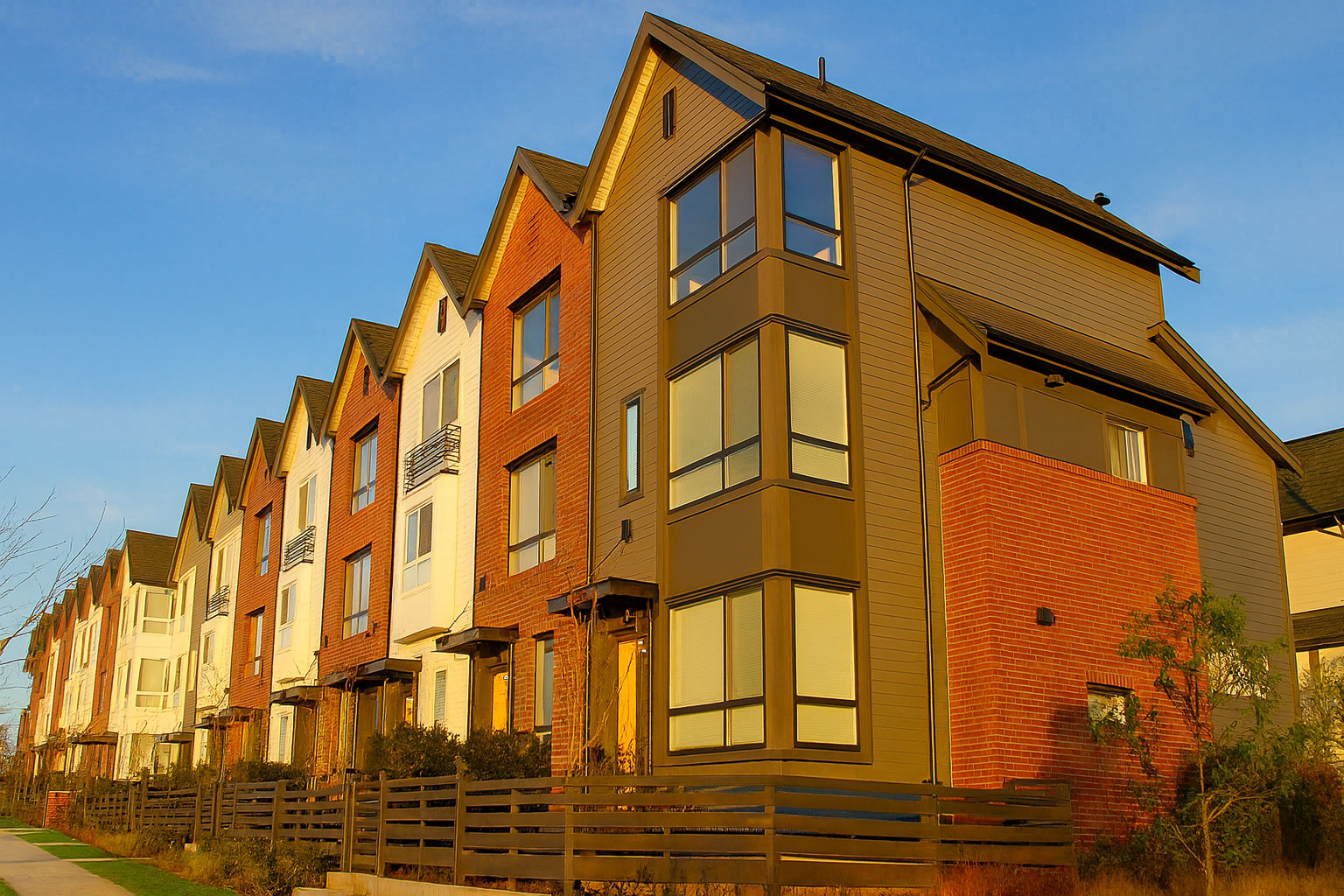
Hard money financing for apartment buildings and multifamily properties.
Multifamily acquisition loans from Hard Money Lenders of Myrtle Beach help investors capitalize on the Grand Strand's structural rental housing demand — a demand driven not just by the 18 million annual visitors who fill short-term rentals, but by the year-round workforce that runs the hotels, restaurants, golf courses, healthcare systems, and retail operations that serve those visitors. Myrtle Beach is the largest employment center in South Carolina outside of Columbia and the Charleston metro, and the majority of that workforce rents. Coastal Carolina University in Conway adds another 12,000-plus students and several thousand faculty and staff who create sustained demand for rental housing. The result is a multifamily market with strong fundamentals across multiple tenant demographics — seasonal and year-round, student and workforce, mid-market and workforce-affordable.
Traditional multifamily lenders impose qualification hurdles that block many investor-favorable acquisitions. DSCR thresholds that require current NOI to cover 125 percent of debt service eliminate value-add opportunities where below-market rents or high vacancy present the exact upside potential that justifies acquisition. Debt-to-income limits penalize investors with multiple existing properties, even when those properties generate strong cash flow. Seasoning requirements prevent recently-improved properties from being refinanced at their new, higher values. We bypass all of these obstacles: our multifamily acquisition loans are underwritten on property income potential and your business plan, not on rigid coverage-ratio formulas applied to current conditions.
Our multifamily program covers acquisitions from two-unit duplexes through mid-size apartment complexes in the 20 to 50 unit range. Loan amounts run from $100,000 to $5 million with terms from 6 to 24 months — designed as bridge capital to fund acquisition and value-add execution before transition to long-term DSCR or conventional agency financing. Interest-only payment options during the renovation or lease-up period maximize cash flow available for property improvements.
Small multifamily acquisitions — duplexes, triplexes, and fourplexes — represent the most active segment of our multifamily lending. These properties are concentrated in established neighborhoods throughout Conway, Socastee, Red Hill, and older sections of Myrtle Beach where mid-century construction created natural multifamily density. Many of these properties have below-market rents because they've been under long-term management without strategic rent pricing. An investor who acquires a fourplex at $180,000 with $3,000 per month in current rents, renovates units as they turn, and achieves $4,200 per month in market rents has created substantial equity and cash flow — and our acquisition loan funds the purchase while that business plan executes.
Mid-size apartment buildings in the 5 to 20 unit range represent the scaling opportunity for investors moving beyond small multifamily into professional-scale rental operations. These properties are predominantly located in Conway — where the combination of affordable acquisition prices and growing rental demand from CCU enrollment and healthcare employment creates compelling fundamentals — and in secondary Myrtle Beach submarkets like Socastee, Red Hill, and Bucksport. We have financed apartment building acquisitions throughout these markets and understand the cap rates, rent levels, and expense structures typical in each submarket.
Value-add multifamily acquisitions are among the most compelling opportunities in the Grand Strand market. Properties acquired with vacancy rates of 20 to 40 percent — typically due to deferred maintenance, poor management, or below-market rents that created tenant quality issues — can be transformed into fully-stabilized, market-rate-rent buildings within 12 to 18 months of focused ownership. Our acquisition loan bridges the period between the distressed acquisition price and the stabilized value that supports conventional refinancing, covering both the purchase and initial renovation capital needed to execute the value-add plan.
Workforce and student housing near CCU and Horry-Georgetown Technical College represents a specialized multifamily niche with reliable occupancy. The CCU enrollment of 12,000-plus students generates demand for off-campus housing within commuting distance of the Conway campus, and the college's continued enrollment growth supports long-term demand. Multifamily properties within two to three miles of the CCU campus — particularly those with unit configurations (three and four bedrooms) that accommodate shared student rentals — can achieve occupancy rates above 95 percent during the academic year.
Multifamily valuation on the Grand Strand requires understanding which cap rate and GRM benchmarks apply to which market segment. A stabilized fourplex in an established North Myrtle Beach neighborhood near the beach trades at a materially different cap rate than a similar-sized property in Longs or Aynor. Investors who apply national multifamily cap-rate benchmarks to Grand Strand properties — particularly in secondary and tertiary submarkets — risk overpaying. We maintain current market data on multifamily transactions throughout Horry County and can provide comparable-sale context when our borrowers are evaluating acquisition opportunities.
Property management quality is the single largest determinant of multifamily investment success in the Grand Strand market. The region's tourism culture means a segment of potential tenants is transient, seasonal, or in service-industry employment with variable income. Effective tenant screening — including income verification at 3x monthly rent, rental history review, and background screening — substantially reduces default and turnover risk. Investors acquiring poorly-managed properties will find below-market rents and high vacancy often reflect management failure rather than market weakness, and that correcting management is as important as completing renovations.
SC property tax structure affects multifamily investment economics in a way that investors from other states don't always anticipate. In South Carolina, non-owner-occupied investment properties are assessed at six percent of fair market value — compared to four percent for owner-occupied primary residences. On a $500,000 multifamily building, that two-percent differential translates to meaningful annual tax differences that must be included in cash-flow projections. Investors who fail to underwrite with the correct six-percent assessment rate will find their actual NOI lower than projected.
Our multifamily underwriting process starts with a thorough income analysis: current rent roll, lease terms, tenant payment history where available, and market-rate comparables. For value-add properties with below-market rents, we project stabilized income based on market rents achievable at the relevant property quality and location — not just current performance. We review operating expense history including property taxes at the correct SC six-percent non-owner-occupied assessment rate, insurance (including flood and windstorm where applicable), management fees, maintenance, and reserves.
We structure multifamily acquisition loans with terms sufficient to execute the business plan: 12 months for stabilized-property acquisitions that are immediately refinance-ready, 18 to 24 months for value-add acquisitions requiring lease-up or unit renovation. Interest reserves during renovation periods reduce monthly cash obligations while units are down for improvements. We do not impose arbitrary seasoning periods or prepayment penalties — if your value-add execution proceeds faster than projected and conventional refinancing is available at month eight, pay us off and take your lower rate.
Our multifamily acquisition loans are available throughout the Grand Strand rental markets including Myrtle Beach, Conway (CCU and downtown workforce corridors), North Myrtle Beach, Little River, Longs, Socastee, Red Hill, Loris, and surrounding Horry County communities where rental housing demand from tourism workers, CCU enrollment, and healthcare employment remains strong year-round.
We finance multifamily properties from duplexes (2 units) through mid-size apartment complexes of up to 50 units. Our loan amounts run from $100,000 for small duplex acquisitions in Conway or Loris to $5 million for larger apartment complexes in Myrtle Beach and North Myrtle Beach. For larger institutional-scale properties above 50 units, we evaluate on a case-by-case basis depending on sponsor experience and deal structure.
We apply the South Carolina six-percent non-owner-occupied assessment rate to all multifamily investment properties — not the four-percent primary-residence rate that some borrowers mistakenly apply when running cash-flow projections. The difference is material: on a $400,000 multifamily property at Horry County's millage rate, the tax difference between four-percent and six-percent assessment is approximately $800 to $1,200 annually. We model taxes correctly in our underwriting and recommend that borrowers do the same in their own analysis.
Yes, CCU-adjacent multifamily properties in Conway are among our preferred multifamily collateral types. The university's enrollment provides a reliable, annually-renewing tenant demand base. We evaluate CCU-area multifamily based on bedroom count and configuration (three and four bedroom units command higher per-bed rents for shared student occupancy), distance and walkability to campus, and the property's condition relative to student housing expectations. Occupancy rates near CCU historically run 90 to 98 percent during the academic year.
Yes — value-add multifamily acquisitions are one of our core loan types. We underwrite based on achievable stabilized rents rather than current below-market rents, provided the business plan for reaching stabilized rents is credible. 'Credible' means: current below-market rents are attributable to management failure or unit condition rather than market weakness; comparable renovated units at nearby properties achieve the projected market rent; and the borrower has a realistic renovation plan and timeline for bringing units to market-rate condition as existing leases expire.
Multifamily acquisition loan terms run 6 to 24 months. Stabilized properties that are immediately refinance-ready typically close on 12-month terms. Value-add acquisitions requiring unit renovations, lease-up of vacant units, or management stabilization warrant 18 to 24 months. Interest rates run 10 to 13 percent depending on property type, location, LTV, and borrower experience. We offer interest-only payment structures during renovation periods. No prepayment penalties — conventional refinance or property sale can occur at any point without additional cost.
Get started today and receive multiple competitive loan offers from verified hard money lenders.