
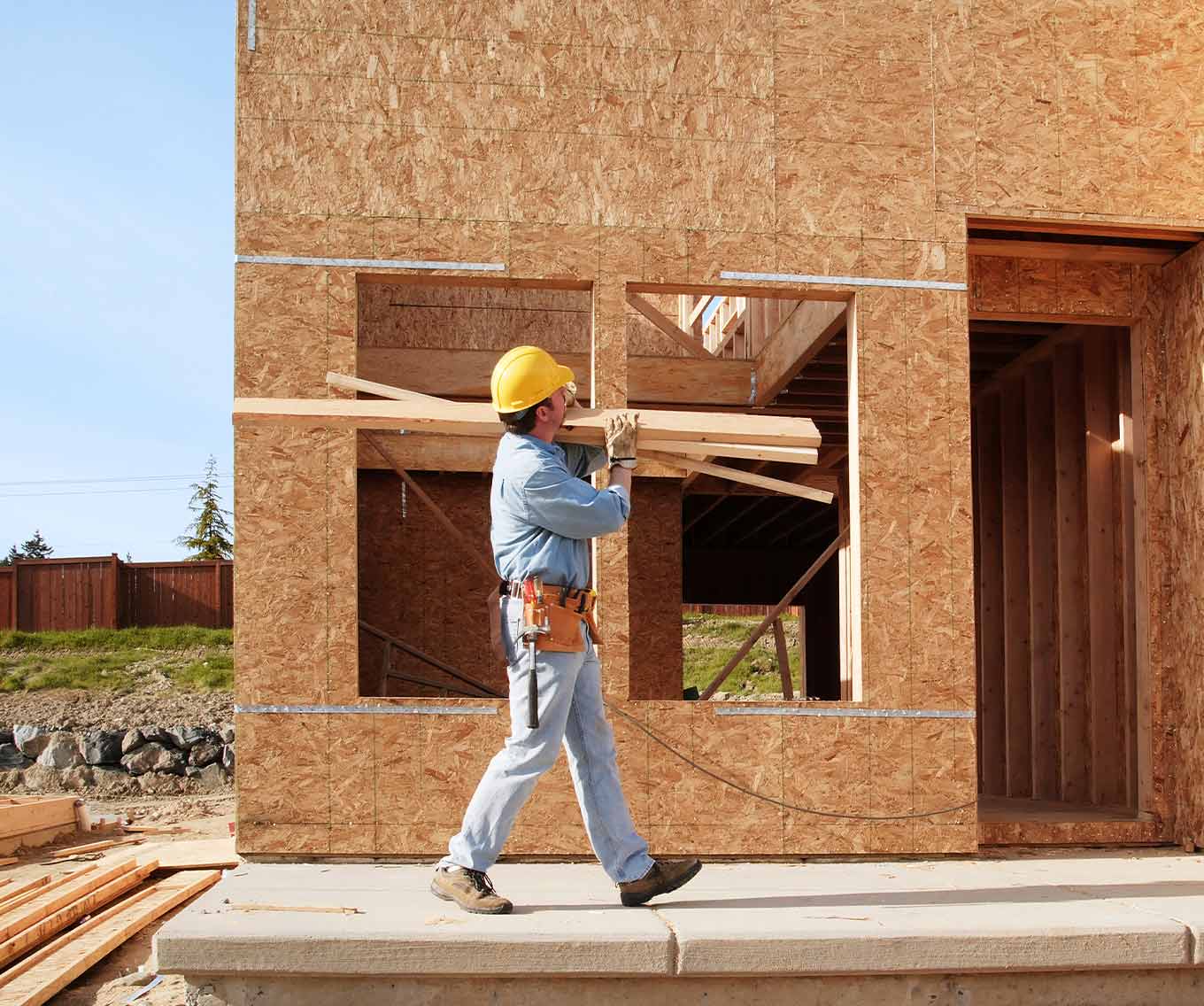
Ground-up construction financing for new builds in South Carolina.
Ground-up construction on the Grand Strand creates the housing and commercial space that the region's persistent population growth demands — and represents one of the most complex financing challenges in real estate investment. The combination of coastal South Carolina's specific construction requirements (wind-zone structural standards, FEMA flood-elevation compliance, CAMA permit timelines, moisture-resistant construction in a salt-air environment), Horry County's active planning and permitting environment, and the inherent complexity of financing a building that doesn't yet exist creates obstacles that most conventional lenders handle poorly.
Hard Money Lenders of Myrtle Beach provides construction financing to experienced builders and developers who understand the Grand Strand construction market and can execute projects successfully given appropriate capital. We are a lender of last resort for undercapitalized or inexperienced builders — we are the capital partner that experienced Grand Strand builders choose when bank construction lending is too slow, too rigid, or unable to accommodate their project's specific structure. Our construction loans close faster than bank alternatives, maintain more flexibility in draw processing, and approach inevitable project challenges with a problem-solving orientation rather than an adversarial enforcement posture.
Construction loan amounts run from $200,000 for single-family spec home projects in the Conway and Longs markets to $5 million for commercial construction projects in the Myrtle Beach and North Myrtle Beach commercial corridors. Terms run 9 to 18 months for residential projects and 12 to 24 months for commercial builds. Interest-only payments during construction, flexible milestone-based draw schedules, and experienced coastal-market underwriting support projects from site preparation through certificate of occupancy.
Spec home construction for resale drives the majority of our residential construction lending. Builders in Carolina Forest, Little River, Longs, and the Highway 544 growth corridors who understand what retirement-migration buyers and move-up buyers want in new construction can execute profitable spec builds at price points from $275,000 to $550,000 with 6 to 10 percent net margins on well-managed projects completing in 9 to 12 months. Our spec construction loans fund both the lot acquisition (where the lot is not yet owned) and vertical construction, with interest reserves during the build period and repayment from sale proceeds. We review builder portfolios for track record and Horry County market knowledge before committing spec construction capital.
Custom home construction for identified buyers represents a lower-risk construction lending category because the end buyer is known and the sale is effectively pre-committed. We finance custom home builds from $350,000 to $2 million throughout Horry and Georgetown Counties, with particular focus on high-end custom construction in communities like Grande Dunes, DeBordieu Colony, Hagley Estates, and the premiere sections of North Myrtle Beach where retirement-migration buyers from the Northeast are building second homes and retirement primary residences. These projects require experienced custom builders who understand the expectations of buyers arriving from $800,000-plus home markets.
Multi-family new construction — duplexes, townhomes, and small apartment buildings — addresses the Grand Strand's persistent workforce rental housing supply shortage. We finance multi-family construction projects in Conway (for CCU-adjacent student housing and healthcare workforce rentals), Socastee, Little River, and other locations where rental housing demand exceeds supply of quality product. Multi-family construction projects require careful cost budgeting and realistic lease-up projections. We structure these loans with interest reserves during both the construction and lease-up periods, allowing borrowers to service debt before rental income is fully established.
Commercial new construction — retail buildings, medical offices, restaurant pads, and light industrial — serves the growing Grand Strand business community. Commercial construction loans require demonstrated development experience, market demand analysis for the project type and location, and in most cases some level of tenant pre-commitment or market-supported absorption projections. We finance commercial builds for experienced developers who have completed comparable projects in the Horry County market and who understand the specific entitlement and regulatory requirements of coastal commercial construction.
Coastal construction cost complexity is the most common source of budget overruns in Grand Strand new construction projects. Wind-zone structural requirements for new construction east of the IBHS coastal zone line add 3 to 8 percent to framing and roofing costs. FEMA flood-elevation requirements for new construction in AE and VE zones require elevated first-floor elevations (with stem wall, piling, or fill foundation as required by zone classification) that can add $20,000 to $50,000 to foundation costs for affected properties. Moisture-resistant construction standards — including specific exterior sheathing requirements, air barrier systems, and corrosion-resistant hardware — add cost compared to standard inland construction. Builders who have not constructed to these standards previously routinely underestimate project costs, and we review scope-of-work estimates specifically for coastal compliance line items during underwriting.
Permit and inspection timelines in the Horry County and City of Myrtle Beach markets extend construction timelines beyond what inland-market builders anticipate. Horry County's active construction market means building permit review queues and inspection scheduling are routinely congested during peak season (March through September). CAMA permits (required for construction within 75 feet of high water on coastal parcels) have SC DHEC processing timelines of 45 to 90 days. Construction projects that have not completed permit processing before our loan's construction draw period begins will face delays. We verify permit status during underwriting and build realistic permitting timelines into project schedules.
Material supply and skilled-trade availability create scheduling challenges during peak season. The Grand Strand construction market competes for lumber, concrete, framing crews, electricians, plumbers, and HVAC technicians with the broader southeast coastal construction market. Projects starting in March or April during peak-season competition for labor and materials routinely experience 3-to-6-week delays for individual trades. Builders who begin project preparation in November or December, lock in contractor commitments and material pricing during the winter slow season, and start construction in January or February consistently execute faster and at lower cost than those who start during peak season.
Our construction lending process begins with a builder qualification review: completed project portfolio, financial capacity, contractor licensing and insurance documentation, and specific knowledge of Horry County construction requirements relevant to the proposed project type. We review project-specific construction budgets for coastal compliance adequacy and discuss timeline assumptions with builders who have primary experience in non-coastal markets.
Draw schedules are established during underwriting and aligned with coastal construction milestones: site preparation, foundation and flood-elevation compliance (critical for flood-zone projects), framing and structural connections, exterior enclosure and weather barrier, rough mechanical systems, interior finish, and final completion. Each draw requires inspection before release and is processed within two to three business days of a passing inspection. We do not hold draws in administrative queues — contractor cash flow depends on prompt draw processing, and we treat draw speed as a fundamental service commitment.
When construction challenges arise — weather delays, permit processing extensions, subcontractor availability gaps — we engage as construction partners rather than default enforcement monitors. Our goal is certificate of occupancy and successful project completion. Challenges that don't change the fundamental project economics are problems to solve; fundamental project economics changes are conversations to have early, not at maturity.
We provide construction financing throughout South Carolina's Grand Strand region including Myrtle Beach, North Myrtle Beach (Cherry Grove, Ocean Drive), Conway, Carolina Forest, Surfside Beach, Garden City, Little River, Longs, and surrounding communities. We also finance qualified construction projects in Pawleys Island and the Georgetown County coastal corridor for experienced developers with Horry or Georgetown County market experience.
We finance residential new construction including spec homes for resale, custom homes for identified buyers, and multi-family construction (duplexes, townhomes, and small apartment buildings). We also finance commercial new construction including retail buildings, restaurant pad sites, medical and professional office buildings, and light industrial or flex-space projects. Projects must be located in Horry or Georgetown County and builders or developers must demonstrate comparable completed construction experience within the relevant market and product type.
New construction in FEMA Flood Zone AE and VE requires first-floor finished elevation at or above the Base Flood Elevation plus applicable local freeboard requirements. We require flood-elevation compliance to be reflected in the construction design documents and budget before loan commitment. Foundation type (pilings, stem wall, or fill as appropriate by zone classification) must be confirmed with the project's engineer. We order an elevation certificate at the foundation stage before releasing subsequent construction draws. Projects in VE zones have additional restrictions on enclosures below the BFE that must be reflected in the construction design.
Construction draws are released based on inspected milestone completion. For coastal projects, the draw schedule includes specific milestones reflecting coastal compliance requirements: a foundation elevation certificate milestone before framing draw release; an exterior enclosure inspection verifying weather barrier installation (critical for coastal projects before interior work proceeds); and a wind-mitigation connection inspection verifying roof-to-wall ties and roof-deck attachment before roofing draw release. All draws are processed within two to three business days of a passing inspection.
We finance 75 to 80 percent of total project costs (land acquisition plus construction) for experienced builders with documented track records and strong deal economics. First-time Grand Strand builders or builders transitioning from inland markets to coastal construction may qualify for 70 to 75 percent. Maximum loan amounts are the lesser of 75 to 80 percent of total project costs or 65 percent of projected completed value as determined by a forward-looking appraisal. The builder's equity contribution — including land equity for builders who already own the lot — must be verified and clearly documented.
Single-family spec home construction in the Conway, Longs, and Little River markets warrants 9 to 12-month terms. Higher-end custom home construction, which typically involves more complex scope, custom materials, and extended permitting, warrants 12 to 15 months. Multi-family residential construction runs 12 to 18 months depending on unit count and scope. Commercial new construction ranges from 12 to 24 months for larger or more complex projects. For coastal projects where hurricane-season weather delays are a realistic risk, we build extension provisions into loan documents at origination with clear terms and fees established upfront.
Get started today and receive multiple competitive loan offers from verified hard money lenders experienced with your property type.