
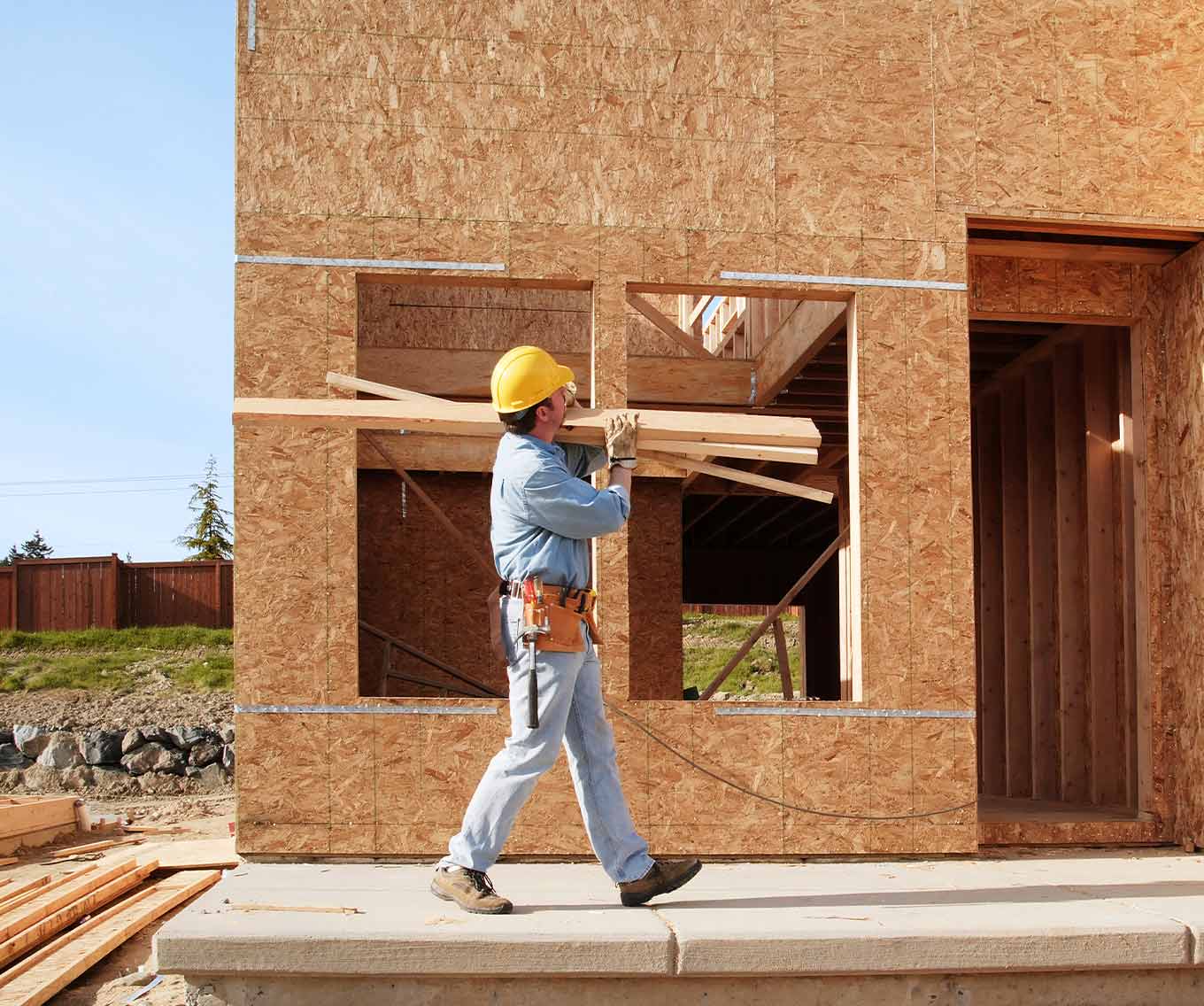
Ground-up construction financing for builders and developers.
Construction loans from Hard Money Lenders of Myrtle Beach provide the ground-up financing that builders, spec-home developers, and commercial developers need to meet the Grand Strand's sustained demand for new housing and commercial space. Horry County is one of South Carolina's fastest-growing counties precisely because it offers what retirees from the Northeast, Midwest, and California are looking for: Atlantic coastline, 300 days of annual sunshine, lower cost of living than the markets they're leaving, and a retirement infrastructure — medical facilities, golf, dining, entertainment — that rivals coastal Florida at a fraction of the price. That migration creates relentless demand for new construction, and our lending supports the builders delivering it.
Traditional construction lenders impose prerequisites that often don't match real-world development timelines. Banks require permits in hand, finalized construction drawings, signed construction contracts, and sometimes pre-sales or pre-leasing commitments before they'll fund dollar one — essentially requiring you to do much of the development work before financing is available. Our construction loans take a different approach. We evaluate the experience of your build team, the viability of your project concept, and the market demand for the product you're building, and we fund deals that meet our underwriting criteria even when some pre-construction steps are still in progress. This flexibility keeps projects on schedule rather than stalled waiting for bureaucratic checkboxes.
Our construction program covers residential custom and spec homes, multi-unit residential projects including duplexes, townhomes, and small apartment buildings, and commercial new construction across all property types. Loan amounts run from $200,000 to $5 million with interest-only payments during construction and flexible draw schedules aligned with project milestones. We understand coastal construction — wind-load requirements, FEMA flood-elevation requirements for new construction in AE and VE zones, energy code compliance, and the permit timelines specific to Horry County, the City of Myrtle Beach, and the various municipalities within our lending area.
Custom home construction represents a significant portion of our residential construction lending. High-net-worth buyers relocating from New York, New Jersey, Connecticut, and Illinois arrive in the Grand Strand having sold homes at premium prices in high-COL markets and seek to build precisely the retirement or second home they want — rather than compromise with available resale inventory. These buyers may work with custom architects and demand high-end finishes, but they also want construction to proceed on a predictable schedule. Our construction loans for custom homes feature two-close structures: construction financing during the build period, followed by permanent financing (from a conventional lender) or full payoff upon completion and certificate of occupancy issuance.
Spec home construction for sale to market buyers drives much of the residential building activity in growth areas including Carolina Forest, the Highway 544 corridor, and the developing sections of Little River and Longs. Builders who understand what Grand Strand buyers want — open floor plans, outdoor living space, golf-cart-accessible neighborhoods, proximity to healthcare and amenities — can execute profitable spec builds with 6 to 10 percent net margins on projects completing within 9 to 12 months. Our spec construction loans fund both lot acquisition and vertical construction with repayment from sale proceeds. Interest reserves during construction minimize monthly cash-drain while the property is being built.
Multi-unit residential construction — duplexes, townhomes, and small apartment buildings in the four to twenty unit range — addresses the Grand Strand's workforce and student rental housing needs. These projects can be sold as individual units (condominium structures) or held as rental investment. We've financed townhome communities near Coastal Carolina University targeting student and young-professional tenants, duplex and triplex builds in Conway serving healthcare workers, and small apartment building construction in secondary markets including Loris and Aynor where new construction rental supply is limited.
Commercial new construction including retail buildings, medical offices, and restaurant pad sites serves the region's growing business community. Build-to-suit projects with committed tenants in hand — a medical practice building their own office, a QSR chain constructing a drive-through pad — are our most straightforward commercial construction loans. Speculative commercial construction without pre-leasing requires demonstrated market demand analysis and experienced developer sponsorship. We also finance pre-construction infrastructure and shell-building work for commercial developments where tenant improvement financing follows separately.
Coastal construction in Horry County carries weather and regulatory complexities that inland builders may not anticipate. New construction east of Highway 17 — particularly within the CAMA jurisdiction buffer and in FEMA flood-zone AE or VE areas — requires flood-elevation compliance at or above the Base Flood Elevation plus applicable freeboard requirements. First-floor elevation, flood-vent installation, and foundation type (stem wall, pilings, or masonry on fill depending on zone classification) all affect construction costs and timelines. We require elevation certificates at foundation stage before releasing framing draws on flood-zone properties.
Hurricane and wind-zone construction requirements add cost and complexity to Grand Strand builds. South Carolina's coastal zone mandates specific structural connections — roof-to-wall ties, roof-deck attachment patterns, opening protection — that add 3 to 8 percent to framing and roofing costs compared to inland construction. These requirements are mandatory, not optional, and proposals from contractors unfamiliar with SC coastal wind-zone codes will systematically underestimate construction costs. We review scope-of-work bids for coastal compliance and flag obvious gaps in wind-mitigation line items.
Material supply and contractor scheduling create timeline risk during peak construction season. The Grand Strand's construction market competes for framing crews, concrete workers, electricians, and plumbers with the broader southeast coastal construction zone, and skilled-trade availability tightens significantly in spring and summer. Projects starting in January and February can lock in crew availability at better rates and maintain schedule. Projects starting in April or May during peak season often face 2-to-4-week delays for each trade. Our construction loan terms accommodate realistic scheduling, including weather delays, and we build extension provisions into loan documents for projects where coastal storm disruption is a genuine risk.
Our construction underwriting begins with a builder portfolio review. We want to see completed projects comparable in scope, price point, and complexity to the one you're proposing. A residential builder who has successfully completed 15 spec homes in Carolina Forest is a different risk profile than a first-time developer — and we structure terms accordingly. Experienced builders with strong track records qualify for higher construction loan leverage and more streamlined draw processing. Less-experienced builders or first-time developers may be required to bring a licensed GC with documented experience.
We structure construction loans with milestone-based draw schedules tailored to each project: site preparation and foundation, framing and rough-in, exterior enclosure (critical for coastal projects before interior work proceeds), interior rough mechanical systems, drywall and finish work, and final completion. Each draw is inspected before release and processed within two to three business days of a passing inspection. We don't hold draws in bureaucratic queues — construction progress depends on contractors being paid, and we facilitate that.
When challenges arise — and in coastal construction they do — we communicate directly and solve problems rather than defaulting to compliance postures. A two-week hurricane-season delay in exterior work, a permit amendment required by a mid-project building-code interpretation, or a supply-chain delay on specialty materials are construction realities that shouldn't trigger loan-default conversations. We reserve those conversations for situations where the project fundamentals have materially changed.
Our construction loans are available for projects throughout the Grand Strand building markets including Myrtle Beach, Conway, North Myrtle Beach, Carolina Forest, Surfside Beach, Garden City Beach, Little River, Longs, Aynor, Pawleys Island, and surrounding Horry and Georgetown County communities where new construction demand continues to grow.
We finance residential construction including custom homes, spec homes for resale, and multi-unit residential projects (duplexes, townhomes, small apartment buildings). We also finance commercial construction including retail buildings, medical and professional offices, light industrial and flex-space projects, and restaurant and hospitality construction. Projects must be located in Horry or Georgetown County or surrounding areas within our lending territory. Builders and developers must demonstrate relevant construction experience for the project type.
Flood-zone new construction is common in our lending area — particularly east of Highway 17 and along the Intracoastal Waterway. We require that new construction in AE and VE zones comply with FEMA National Flood Insurance Program requirements and any applicable local freeboard requirements above Base Flood Elevation. We order elevation certificates at the foundation stage before releasing subsequent construction draws. Construction budgets must reflect the cost of code-compliant flood-zone construction including proper foundation type, flood vents where required, and minimum finished-floor elevation.
We typically finance 75 to 80 percent of total project costs (land plus construction) for builders with documented experience and strong deals. First-time developers may qualify for 70 to 75 percent. We calculate the maximum loan amount as the lesser of 75 to 80 percent of total costs or 65 percent of projected completed value (determined by appraisal). The borrower's equity contribution — including land equity if the land is already owned — must be verified and clearly documented at closing.
Single-family custom and spec home construction typically warrants 9 to 12-month terms. Multi-unit residential projects run 12 to 15 months. Commercial new construction ranges from 12 to 18 months depending on project scope and permit complexity. For coastal projects where hurricane-season weather delays are a realistic risk, we build extension provisions into loan documents at origination rather than treating extensions as exceptional relief requiring separate negotiation. Extension fees apply but terms are established upfront.
We typically require a licensed South Carolina general contractor to manage construction projects. Owner-builder arrangements where the borrower serves as their own GC are evaluated case by case — borrowers must demonstrate significant personal construction management experience, hold appropriate SC licensing, carry general liability and workers' compensation insurance, and present a detailed construction management plan. For most investors who are not professional builders, using a licensed, insured GC is both our preference and a best practice for quality and timeline management.
Get started today and receive multiple competitive loan offers from verified hard money lenders.